Insights · ProCast
How to Get More Out of Event Sponsorships
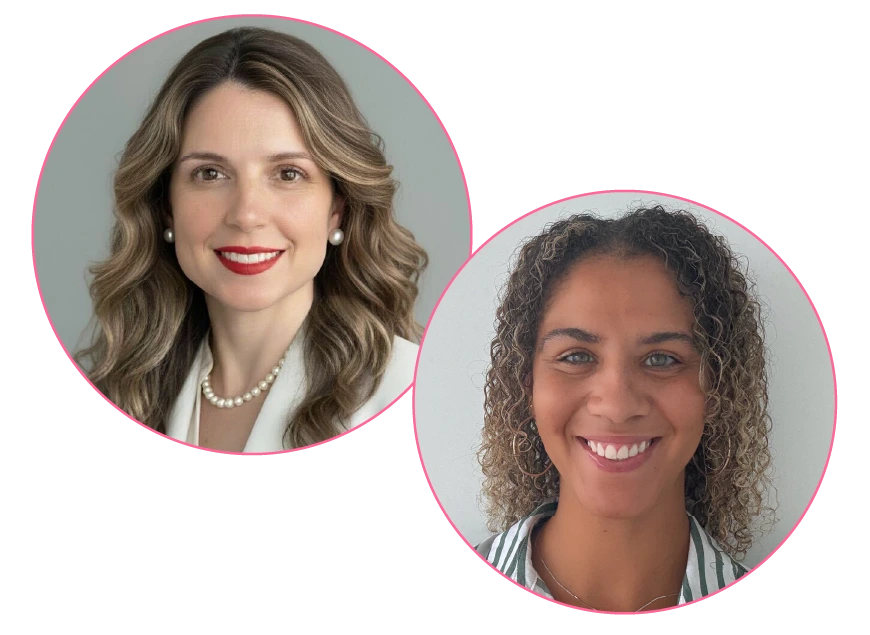
In this episode, we’re talking with Senior Partnerships Manager at Orion, Chloe Collins, and Program Manager, Event Sponsorship at Oracle, Priscilla Mello.
Chloe and Priscilla dive into the human side of event sponsorship, get into how it’s all about relationships, provide actionable takeaways for how to make your sponsorships more effective and rewarding.
You’ll learn:
What you need to make sponsorship resonate and flow within an event
How to make sponsorships extend out for years to come
How big an effect low lift ideas can have
What it takes to find a good sponsor
So hit the download button, screw your headphones on tight, and get ready to take notes.
Read the transcript below and listen to this episode on Apple Podcasts, Spotify, YouTube Music or wherever you get your podcasts.
Show Notes
Our Guests
Chloe Collins is a Senior Partnerships Manager at Orion, where she leads sponsorship and partnership strategy across Orion’s events and marketing initiatives. With eight years of experience and a sales background in the financial services industry working with financial advisors, Chloe brings a relationship-driven approach to building strategic partnerships and impactful event experiences.
Since joining Orion in 2025, Chloe has led sponsorship efforts for all of their company-owned events, including its flagship annual conference. She works closely with partners to develop strategic collaborations and experiences that drive meaningful engagement with clients and attendees.
Priscila Mello is a Strategy & Operations leader with over a decade of experience leading global operations, sales enablement, sponsorships, and international flagship events for some of the world's leading technology and hospitality brands. Throughout her career, she's partnered with teams across North America, Latin America, Europe, and Asia to build strategic partnerships, deliver world-class experiences, and drive measurable business growth. Passionate about bringing people together through impactful events and meaningful collaborations, Priscila enjoys sharing insights on sponsorship strategy, operational excellence, and the power of strong partnerships to create lasting business value.
Credits
Hosted and Written by Jeremy Dobrish
Produced by Bethany Potter
Theme Music by Mike Mancini
Logo design by Shraddha Maharjan
Special thanks to Dossie McCraw
Transcript
Episode Transcript
Guests: Priscila Mello and Chloe Collins
CHLOE: They just give you a different perspective to really take that experience to the next level and exceed the expectations we set for our sponsors and our attendees. But definitely, the magic could not happen without the production team.
JEREMY: Hey there, thanks for tuning in. I'm Jeremy Dobrish, and this is the ProCast, brought to you by Proscenium Events in New York City. It's a podcast about corporate events. Each month, we take a bite-sized look at how to make corporate events, conferences, programs, and shows even more effective and impactful.
JEREMY: Today, we're talking about sponsorships with the Senior Partnerships Manager of Orion, Chloe Collins, and the Program Manager of Event Sponsorships at Oracle, Priscila Mello. And I've got to say, I learned a lot about the human side of sponsorships that gave me a new perspective. So, want to know how to make your sponsorships more meaningful? Want to learn what it really takes to make a sponsorship work? Then stand by for cue one of the ProCast. Cue one, let's go.
JEREMY: All right. So I'm here with Priscila Mello, the Event Sponsorships Program Manager at Oracle, and Chloe Collins, Senior Partnerships Manager at Orion. And I'm really excited to talk to you both. I'm just going to dive right in. When people are selling sponsorships, I want to start with your top, here are the things you should think about when we're talking about bringing in partners to sponsor a program. Chloe, why don't we start with you?
CHLOE: Yeah, it's a great question. So I focus on relationship-based sponsorships and partnerships. At the end of the day, I want them to feel that this is more than just a transaction. So when opening these conversations, I really try to go in with a lot of questions: what are you trying to get out of attending this event? Solving for outcomes and working backwards from that. Really trying to see what value they're looking to get, and how I can be a tool and a resource to help them achieve that.
JEREMY: And Priscila, how about you? What's at the top of your list?
PRISCILA: I'm glad that Chloe and I are in pretty good sync, because it's exactly that. It's not about one single transaction. It's about how you make sure you cultivate a partnership that is going to last for more than one event, building a relationship together.
JEREMY: That's interesting, because I was just about to ask, what do you mean by a relationship? I think of the word partnership, but tell me, is that the right word? Maybe relationship is better, because I like what you're saying, the idea that this is something that's going to last over time. This isn't just one thing. So Priscila, is that what you mean by relationship?
PRISCILA: For me, it's not about, let's just make sure our objectives end here. It's about how we can make sure that our goals, and everything we're going to build together, is going to outlive this event, and maybe last for years to come.
JEREMY: I love that. So when you're coming up with ideas for sponsorship opportunities, how do you do that?
CHLOE: For me, depending on the sponsor, you've got to do your research. You have to know who you're talking to, who you're inviting, and, at the end of the day, what our audience, our attendees, and our clients are looking to see, and who they're looking to hear from. So when it comes to looking for sponsors, or trying to figure out who could best resonate with our audience, you've got to do your research and go through the information-gathering stage. The second a partner reaches out and asks to sponsor an event, you have to be able to identify what they can bring to the table. How can it add value, not only to our event and our attendees, but what can they get out of it? And spin their sponsorship, maybe it's not a tailored, traditional sponsorship package with a booth. It could be that you have other deliverables included, but it's going to be the most natural fit for you. So from a creativity standpoint, there's the research involved, but then you also have to do a little digging with that sponsor, with that partner, to figure out what we can create to really make this event magical and valuable to you.
JEREMY: Priscila, what do you think? Where do these ideas come from?
PRISCILA: There are lots of different events and different partners. Some events are very strict, so there isn't much room for extra things we can do; we need to attain more to the schedule, to the theme, things like that. But there are other events, just like Chloe mentioned, that exercise a little more of our creativity. And there are the partners we're used to working with, that we have that close relationship with, so we already know what they're doing. Sometimes it's easier for us to come up with ideas, or for them to come to us and say, "We have this product together, we're doing this together, why don't we explore specifically this way?" So there are lots of things going on. We just need to attune and make sure we're using the resources available to us.
JEREMY: So is there a specific example of that?
PRISCILA: Yeah. Sometimes the ideas, at first, sound a little crazy. But then we sit down and explore the opportunity of building something from the ground up, something very different from what they'd done before, especially at other events, because this was a little more creative than other things. And of course, they also have their ideas to chime in and say, "I like what you said, but I'd prefer if you'd follow a specific way." So sometimes it's just an idea that sparkles, and then we start building this journey together, from puppy playgrounds to bandana bars and cat corners and things like that.
BETHANY: This is behind-the-scenes Bethany breaking in with a fact check. A puppy playground is a fenced, supervised, sponsored play area set up at an event where dogs can run around. A bandana bar is a station where dog owners get a custom or branded bandana for their dog, often personalized on the spot. And a cat corner is the feline equivalent. I myself am a cat person.
CHLOE: We had a sponsor that asked for something out of our wheelhouse. It wasn't something that couldn't be done; it was very simple, very low lift. But they wanted it included in their sponsorship, and in our mind, it was a way to connect our attendees, and the targeted audience they were looking for, with them, and we weren't sure how it was going to land. Essentially, it was a book signing, it was that sponsor's book. The CEO of that firm had a booth, they had a traditional sponsorship, and they'd asked to do this. And that's not promoting our company by any means. So it was a very low lift for us, just set up a table, wait until after the main-stage keynote, and then feel free to hang out there and see who comes to stop by. Following the event, the sponsor posted a picture. The line was wrapped around the corner. It was amazing. When I followed up with them, they said, "Chloe, that was by far one of the most valuable things we were able to do, because we ended up walking away from that event with tons of really quality conversations and leads." It's just things that are a little outside the box, that I would never think to do, or that our team would think to do, but things that are really low lift like that can really make a difference. And when you put it into perspective, it's not a selfish move on our part. We're not sitting here saying no because it doesn't promote our brand. We know that in the long term it's providing them value, and that just goes back to the whole relationship part of it. It builds some credibility and trust in that relationship.
JEREMY: So Priscila, do you like to partner with the production agency? And if so, how does that relationship work?
PRISCILA: Absolutely. I think the production agency are the ones who bring to life everything we sell. We sell the dream, and you guys have to deliver that to the audience and the sponsors. So we need to work very closely together at every step of the way. I think that's the beauty of sponsorship, because it works with so many different workstreams, from conception to sales, delivery, post-production, all of that.
JEREMY: That's music to my ears. Chloe, anything you would add to that?
CHLOE: Working closely with the production team, they just have this creative mind, they're able to bring things to life and bring things to the table that I might not have thought of, that my team might not have thought of. They give you a different perspective to really take that experience to the next level and exceed the expectations we set for our sponsors and our attendees. But definitely, the magic could not happen without the production team.
JEREMY: So how do you work to weave sponsorship throughout an event so that it feels more holistic and organic to the event itself?
PRISCILA: I think you have to weave them into the topic you're going to work with and bring relevance to what they're going to do. So it doesn't necessarily need to be something completely innovative all the time. It just needs to resonate with the audience, because at the end of the day, that's who really matters. You want to make that event relevant to the audience that's going to be there. So you have to really know who that audience is, so you can create whatever experience is going to resonate with them, and then bring the sponsors in a way that doesn't feel unnatural, but feels like it flows with the event.
JEREMY: Yeah, that feels spot on. That's gorgeous. What about, I know, Chloe, you talked about the book signing, but I wanted to give each of you an opportunity, if there's an example of a specific sponsorship you created that felt very gratifying, where you felt like, wow, my company got something from that, the attendees got something from it, the sponsor did, it was just a perfect match.
CHLOE: Yeah. We had a pretty non-traditional sponsor who we ended up doing a yearly partnership with, for other events as well. But this one was unique, because their services are not something our clients can directly buy. It's more of consultations, and it's a different point of view from what some of our other sponsors do. So we were having a hard time figuring out what would make the most sense, that doesn't feel transactional, doesn't feel like you're slapping a sticker on something. It turned out their whole goal was to just get in front of a certain audience. So we found a couple of different speaking engagements, so they could hop on a panel and contribute to that conversation. And the credibility of being on that panel was amazing, because it was with several different large CEOs at some pretty large firms, including ours. We had some great feedback on that conversation. We also included them in some other little activations throughout the week for that event. And they came back to us and said, "Hey, this was such a great event, a lot of really great conversations, really valuable." We ended up then sponsoring their conference as well, even though we aren't their traditional sponsor for their event. So it just goes to show that partnerships and relationships aren't all one-sided, and that sponsorship was extremely effective for our larger partnership long term.
JEREMY: I love that. That's perfect. Priscila, how about you? A home run example?
PRISCILA: I'm going to pivot this a little. It wasn't an example of sponsorship, but of how to work with a partner to make something successful for both of us. I was the sponsorship lead for an event in Latin America, and the sponsor, who had everything planned, did not have the space to include one of their customers, and it was a very high-visibility customer for both our company and theirs. They were like, "We cannot lose this customer. I have already invited them, so we have to make something happen." And it just fell on my lap, like, what do I do with this right now? I needed to figure out a way to make sure this customer was brought in. But also, it was closer to the event, so I did not have much wiggle room. So I linked in with the people on my team who built the content for that specific event. I had to pitch in a couple of ideas and try to connect the different people and work out ideas. It was a roundtable, and this customer came in. He was very pleased to be on the stage. We had other executives come in, and they were able to discuss some ideas. At the end, everyone was so happy that they were like, "We're going to do that more often for other events." So I think that's the beauty of it. It's coming together and making sure that, at the end of the day, we are all going to work toward the same goal.
JEREMY: It's interesting. In both of your examples, it feels to me like the reason it's working is because you're connecting it to the content. Do you think that's important, or does that make a difference?
CHLOE: At the end of the day, at least at a lot of our events, the audience not only wants to have some takeaway points, but they also want to be heard. They want to know, "Hey, here are some problems I might be having or facing, here are these challenges, what conversations should I be having, and who should I be having them with, to solve for those or take a step in the right direction?" And a lot of our partners and sponsors want to be in that room, want to be in that conversation, maybe not necessarily for their own individual product, but they want to hear as well: what are some challenges and grievances that you're having, and what tools and resources do we have, or are there in the industry, that can help solve for those?
JEREMY: I love that. Anything you want to add to that, Priscila?
PRISCILA: I think content is usually the central way in which we share our products, our innovative ideas, with the larger public. So sometimes it's easier to connect with that. Of course, we could have tables, we could have specific experiences. But sometimes, especially for those high-visibility executives, content is just the best way to deliver their message.
JEREMY: Yeah, it makes sense to me. That's where my mind would go. What about if someone came to you, a peer, and said, "Hey, for my event, I'm having a hard time finding sponsors," what sort of advice would you give them? Or what kind of mistakes do people make? What do people get wrong when they're looking for sponsors?
PRISCILA: I would ask them how they're doing it. How are they leading the way? Are you just trying to cast a wide net and see what you can grab? Or are you making sure that you have a selected group of people who resonate with the event you're promoting, and that you have the data and all the points to back up your story? So I think it's just about how you do it, more than "I don't know how to do it."
CHLOE: For me, I'm all about the small wins, the early wins, the easy wins. You need some sort of motivation. When I first started in this role, I was brand new to the company, nobody knew my name. So I was essentially cold-calling hundreds of people, trying to convince them they should be a sponsor at this event, and they don't know me from a hole in the wall. For me, I realized I had to pivot, and I'm not afraid to go to some of my coworkers and peers who might have those relationships for that first easy win of, "Hey, can you make a warm introduction for me?" and build trust from there. Once you get in the groove of having a couple of those low-hanging-fruit sponsors, either they were a sponsor at a previous event or in previous years, start with those, that might be, not necessarily easier to grab, but you feel a little more confident going into those conversations. And then from there, as Priscila mentioned, you have some data points to back yourself up and build credibility as you're having more conversations with some newer folks that you didn't need those warm introductions for.
JEREMY: It's so interesting. What I'm hearing is it really does make a difference. If you can get brand A, B, and C on board, you can leverage that to get other brands interested.
PRISCILA: Sometimes it helps. Of course, those big names are very attractive to other sponsors, so they feel, "Okay, so this is a real event, it has some important people who are going to be there," so it helps. But it's not only about that. It's also about how you build relationships with other people. You leverage past relationships that sometimes don't even come from you, sometimes it's a legacy from the company you're just starting with. And sometimes it's just about you, and the relationships and how you've built your name and your own brand, so that people recognize you and say, "Okay, I want to sponsor an event because Chloe is there, because Chloe is the partnership lead."
CHLOE: What I've found really resonates is they want to know what some of their other peers in the industry have done sponsorship-wise. For example, I work with a lot of asset managers, and, "Hey, this asset manager," and I won't give the actual name, but we have a couple of them that decided to build their own package, and we found that, in my experience of working with other firms like yours, this route might be better, but happy to pivot based on what goals you have. So while it's not necessarily saying, "Hey, this sponsor is going, so you should go," it's more, how can I tailor my sponsorship package to drive value to that event? And what has Chloe done as a partnerships manager to ensure those goals have been met? What is she doing to show that's going to happen? The more conversations you're having, the better you'll be able to say, "Okay, they don't want X deliverable, so maybe let's focus on this other one, or replace it with this." So just having more conversations and getting that experience makes the harder conversations easier, in my opinion.
JEREMY: Wow. Priscila, anything you'd add to that?
PRISCILA: Yeah, I think it's important for us, and for the audience and the sponsors, to know who's going to be part of the event. That's why we usually have what we call a sponsor catalog, which is just a page within our event's website where we show who is going to be there and their tiers. So it promotes, it helps everyone, and I think it's pretty easy and clear for everyone to know where we stand.
BETHANY: This is behind-the-scenes Bethany breaking in with a fact check. A sponsor catalog is the public list of who is sponsoring, sorted into paid levels like gold, silver, or bronze. Everyone can see where they stand, so it creates a subtle ladder. A sponsor seeing peers in the gold tier may decide they want to be at gold too. So the catalog is not just a list, it's a quiet sales tool.
JEREMY: So do you have, like, postmortems with your sponsors? Do they come to you after the event and say, "This really worked for me, I loved this," or conversely, "I've got to be honest, I don't feel that I got what I was hoping to get out of the event"?
PRISCILA: So we have a survey available in our sponsor-facing tool. We also have reminders. We try to walk into the event and make sure we connect with our sponsors, and if there's any feedback, we relay it back to our team and our leadership. So it's a lot about the feedback and how we can make sure it works in the long term.
JEREMY: Chloe, anything you want to add?
CHLOE: Yeah. I always ask every single one of my sponsors to please provide me with full transparency. The only way we can give you and our attendees a better experience is if you lay it out on me. Give me the full truth, nothing but the truth. Those conversations can be tough, but at the end of the day, we all know that in order to get better, we have to hear those things and make changes. Maybe it could even be something as small as where they were placed in the exhibit hall. And you also hear really great things too, which is awesome, they love to provide the feedback of, "Hey, I've really loved this, so let's do it again next year." So we keep the things they loved, that we heard a bunch of people rave about, and then we make tweaks and changes and get rid of things based on what we hear, not only from our partners, but from the attendees as well. And a lot of the time, our sponsors' and our attendees' feedback match up, so that's an easy mix for next year.
JEREMY: Nice. I wanted to ask you, everyone is always talking about AI and how fast technology is changing, and I'm curious how that affects sponsorship. Or, to ask the question a slightly different way, if you look ahead into the future, which is very difficult to do these days, but five or 10 years, where do you think sponsorship is going? Or what will technology enable sponsorships to do?
PRISCILA: AI is evolving so fast, it's hard to predict how it's going to be. But I think it's going to be about how fast we adapt to AI more than anything else. So if AI is doing the basic stuff, let's make sure that we're doing the more complicated stuff, the human interaction that cannot be replaced by AI. How are we going to make sure we're really leveraging this very powerful tool to our benefit?
JEREMY: Yeah, for sure. Chloe, what do you think?
CHLOE: Yeah, that's a great question. I would say that, at the end of the day, people still crave human connection. Whether AI takes over in the form of, they can just sign up online and then all XYZ is delivered to them via email, whatever it may be, there are ways we can use it to our benefit and make us more efficient. And because I am so relationship-driven, and I'm really big about building that trust, I think that at the end of the day, there's nothing wrong with picking up the phone and explaining things, and even helping them walk through whatever AI tools we have available to them.
JEREMY: It's really interesting. I'm learning a lot here talking to you both, because that human connection must make a big difference. You started with, "It's not transactional, it's a relationship," and now you're talking about you, as people, being on the line for these sponsors to make sure they get the value from whatever they spent. And in a way, it's on you. They're looking to you. So if you're looking at them over time to make sure they're going to be happy, not just today, but for events years down the road, that's a very human relationship. I don't think AI is going to solve that.
PRISCILA: If you think about what happened during the pandemic, we all survived, but we were very isolated. We were in our own homes doing our own thing, through phones, computers, screens all the time. And after that, what were we craving? We were craving human connection, because that's natural to almost everybody. So that's the difference. We have lots of technology available, we can use it to make our lives better, but at the end of the day, we have to remember that this is also about how human connections thrive in those specific environments in which you lead with a purpose.
JEREMY: Amen. I agree with that 100%. We were talking about home run stories earlier, but I imagine you two have seen all kinds of crazy stuff. I'm just curious, it doesn't have to be something that went badly, but just something you remember that was a funny story, where you just think, "Oh my gosh, this is bonkers."
CHLOE: Yeah. In February, we had our annual flagship conference, and the day all of our sponsors were to get there, we had the huge northeastern winter storm. The booths had to be set up by a certain time, the exhibit hall was opening, and people were texting and emailing and calling me left and right saying, "I'm not going to make it." I kid you not, I was on FaceTime with these sponsors, setting up their booths in the exhibit hall, trying to make sure it was set up how they wanted. I was running around the exhibit hall grabbing my coworkers, "Hey, I need you to set this one up, just get everything unpacked, and I'll go over and do it." And as hectic and chaotic and stressful as it was, it meant a lot to the sponsors. We set up little cards on all the tables for those who weren't able to make it due to the storm, a little thing that said, "We couldn't make it due to the storm, we'll see you tomorrow." Just a little note, so it didn't seem like they just weren't there. It's something we still talk about to this day in the offices. Of all days for this storm to happen, it's when they need to be set up.
JEREMY: Wow, I love that story. And again, that gets back to, on the one hand, you use technology, you're FaceTiming with them, showing them what you're doing, but on the other hand, it's very human, "Of course you can't be here, and of course we're going to do everything we can to still make this special for you and help you achieve your objectives." That's wonderful. Priscila, any crazy stories?
PRISCILA: Oh, there are so many of them. Events in Latin America where the sponsor was going to ship their giveaways, and they were all umbrellas, and then just one of the umbrellas showed up, and they were like, "Okay, we just need to make sure we decorate it the best way, and we're not going to use it as a giveaway, but just as something to decorate your booth." So we have to be creative and try to support people as much as we can, but there's just an extent to what we can do, unfortunately. I wish we could do more.
JEREMY: Yes, always. I'd love to move on to our lightning round. So these are three questions we ask all our guests. Who's your biggest get? By that I mean a guest speaker, an entertainer, or a subject matter expert who you would just absolutely love to see at a live event. Priscila, do you have one?
PRISCILA: I would love to see very inspiring people, like Jordan Peterson, Brene Brown, all those people you can hear for five minutes and you leave the room feeling inspired, at least for the rest of the year.
JEREMY: Sounds good. Chloe, how about you?
CHLOE: Mine would be Reese Witherspoon. I love a woman in leadership, and she is amazing with storytelling, and marketing your own brand, and taking risks, reinventing yourself. Absolutely love her.
JEREMY: No doubt about that. So this is interesting, because you two probably don't get into the general session room quite as much as some of our other guests. But I'll ask the question anyway: in terms of the presenters up on stage, is there anything you've seen where you wish presenters would do more of something, or less of something? Advice for someone speaking on stage.
CHLOE: Yeah, this is a hot take, but I really wish sometimes they would be less impressive. With AI accelerating, focus on being real and authentic, and not just talking through slides and talking at the audience. Loosen up a bit, make people laugh. And again, going back to that human connection, be authentic.
JEREMY: Oh, that is great advice. Priscila, how about you?
PRISCILA: I second that, absolutely. I think perfection impresses, but imperfection connects. People are so concerned with making an impeccable presentation that they lose the ability to connect with people. And that's what happens at the end of the day. The most powerful speakers make sure that you have that connection with them, that you leave the room feeling like, "Okay, I know how this person touched me," rather than, "I have some content, some key points that I'm going to take as takeaways."
JEREMY: Totally agree. All right, last question. Is there something, a book, a movie, a person, that was a big influence on you, and particularly on your career? Priscila?
PRISCILA: There are so many. I'm a fan of those books. There's one in particular, Atomic Habits, because I think those small, consistent little things we do on a daily basis are, at the end of the day, going to have a big impact on how you leverage yourself and make sure you can push forward.
JEREMY: That's a great book. I love that book. Chloe, how about you?
CHLOE: Yeah, mine is The First 90 Days by Michael Watkins. It was something my now-manager asked me to read before coming on board, and it truly did change the way I looked at relationships, not just at work and professionally and sponsorship-wise, but beyond, in a leadership context. Building trust early, and first impressions, mean everything. That's where, you've heard me say a lot, building credibility, that's where it comes from. It truly has changed my outlook and my perspective on how I interact with people on a daily basis.
JEREMY: Wow, I don't know that book, I'm going to have to look that one up. That's great, and we'll put the information for all these things in the show notes. I just want to wrap up and say, this was a quick conversation, and yet I got a ton out of it. I really did walk in not knowing that much about sponsorship, and I feel like I understand what you do differently, and in much more depth, and have not just a new respect for it and a new understanding of it, but, I know this is going to sound silly, but a warmth for it. I understand the relationships and the connections and the partnerships and how important that is, and how weaving sponsorships into the event is so important, and keeping the sponsors happy and not letting it be transactional. I really learned a lot. So I just want to thank you both very much for coming on. I really appreciate your time.
CHLOE: Yeah, thank you for the opportunity. It was great.
PRISCILA: I was glad to be part of it, so thank you so much.
JEREMY: Well, that was super interesting, talking to Chloe and Priscila about sponsorships. For me, there were tons of takeaways, but these are the four tops. Number four: finding a good sponsor takes good research to find the right fit. Number three: sometimes low-lift ideas have major impact. Number two: sponsorships are about relationships, and can extend out for years to come. Number one: you need to understand your audience to make sponsorships resonate and flow within the event.
JEREMY: But look, I could talk about this stuff all day, and if you want to talk to us about sponsorships or anything about live events, check out our show notes for more info. There's lots of fun stuff in there. Or just go to proscenium.com and drop us a line. We'd love to hear from you, because at Proscenium, we help presenters do their best in front of their most important audiences. As we like to say, we help brands perform, and I have a sneaking suspicion we can help your brand perform. And if you want to get in touch with Chloe or Priscila, you'll find their contact info in the show notes. If you like the ProCast, you can listen at proscenium.com or wherever you get your podcasts. And if you want to check out our newsletter, you can get that at proscenium.com too. Today's show was hosted by me, Jeremy Dobrish, produced by Bethany Potter, with original music by Maestro Mike Mancini. And you know how at the end of podcasts they ask you to go to Apple Podcasts and leave a good rating? Of course, we'd love you to do that, so more people hear about the show and we can hear your thoughts. But if you learned a few tips and want to keep this one just between us, that's cool too. So until next time, stand by to fade the ProCast out. ProCast out. Let's go.