Insights · ProCast
Episode 21 — How the Circus Can Re-Vitalize Your Next Event
Guest: Gypsy Snider, Founder & Artistic Director at The 7 Fingers
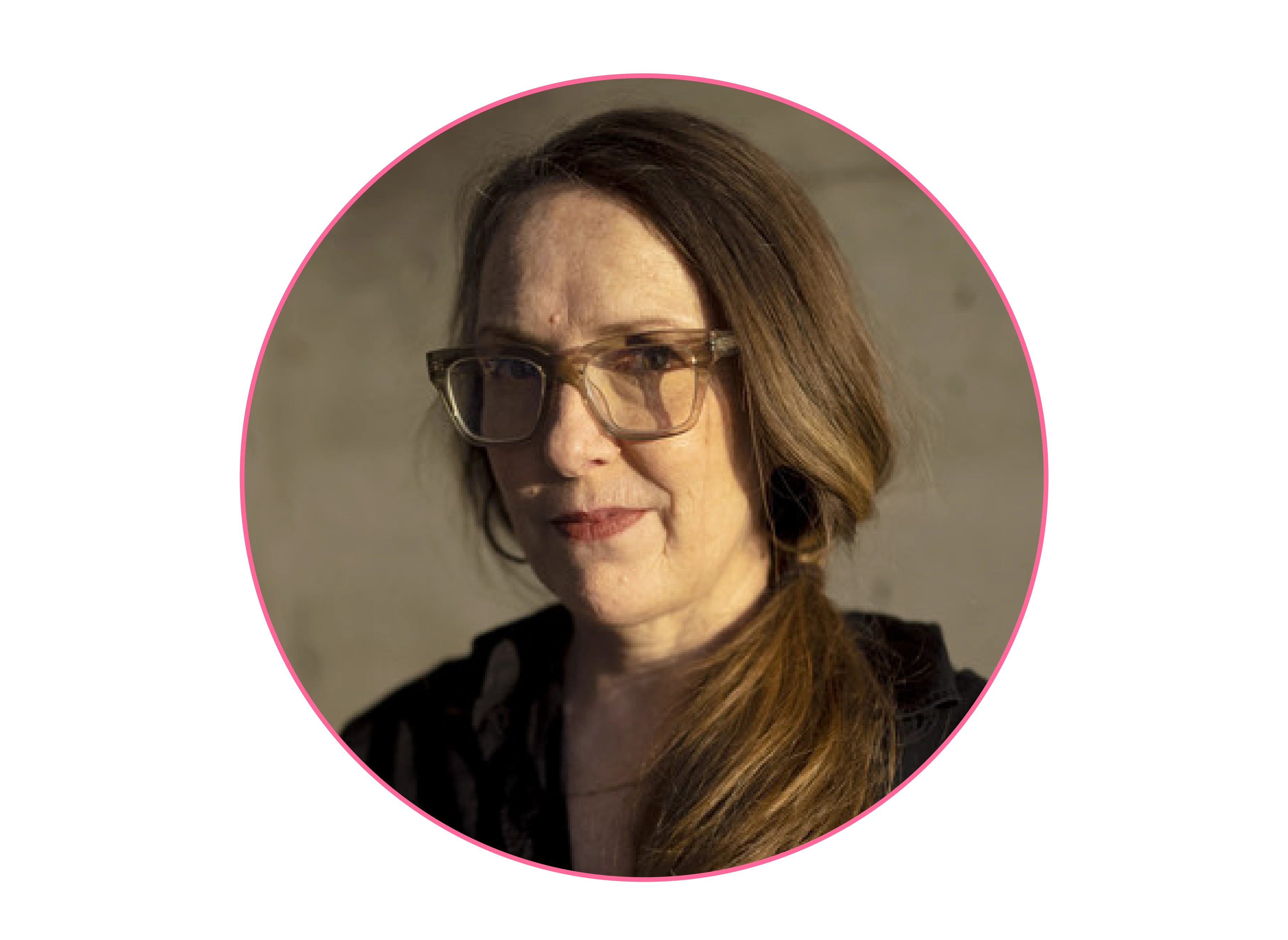
In this episode, we’re talking with the Founder and Artistic Director of The 7 Fingers, Gypsy Snider. You may not immediately think of the circus as a way to tell a story about the human condition or to better get across your messaging, but after listening to Gypsy, your perceptions just might change and expand. So hit the download button, screw your headphones on tight, and get ready to take notes.
Read the transcript below and listen to this episode on Apple Podcasts, Spotify, YouTube Music or wherever you get your podcasts.
Show Notes
Check out the Orion Ascent Opening Act and learn more about the program.
Learn more about the Orion program
Our Guest
Co-founder and Artistic Director of The 7 Fingers Gypsy Snider wrote and directed Geante!, Dear San Francisco, SisterS, Réversible, Intersection, Amuse, Un Dia, Traces, and Loft. Constantly branching out into new mediums, Gypsy has choreographed televised feature performances for America’s Got Talent, Her Majesty’s Royal Variety Performance, the illusionist Darcy Oake’s Edge of Reality, and several large-scale fashion shows for Bench in the Philippines. In 2013, working with director Diane Paulus on a new vision of Pippin, she choreographed and wove circus into the revival of the Broadway musical. Gypsy’s work on Pippin earned her a Drama Desk Award and an Outer Critics Circle Award.
Credits
Hosted and Written by Jeremy Dobrish
Produced by Bethany Potter
Theme Music by Mike Mancini
Logo design by Shraddha Maharjan
Special thanks to Dossie McCraw
Transcript
Episode Transcript
Guest: Gypsy Snider
GYPSY: We always ask every corporation we work for, what's your goal? How do you want people to feel before, during, and after this event? And then we set our minds to choreographing or writing something that we feel will maybe surprise and delight.
JEREMY: Hey there, thanks for tuning in. I'm Jeremy Dobrish, and this is the ProCast, brought to you by Proscenium Events in New York City. It's a podcast about corporate events. Each month, we take a bite-sized look at how to make corporate events, conferences, programs, and shows even more effective and impactful. For those of you who don't know, a proscenium, the name of our company, is the supporting arch at the front of the stage through which the audience experiences a performance. So our very name is all about performance, and we help brands perform. Today, I'm talking with the founder and artistic director of The 7 Fingers, Gypsy Snider. They're a collective of circus performers and creators dedicated to telling human stories with superhuman skills. They've created magical moments not only for corporate events, but also on cruise ships, for fashion shows, and on Broadway and beyond. Intrigued? Want to learn how the circus can not only revitalize, but humanize, your event? Then stand by for cue one of the ProCast. Cue one, let's go.
JEREMY: All right, I am here with the founder and artistic director of The 7 Fingers, Gypsy Snider. I want to jump in with a question I'm sure you get asked all the time: what is The 7 Fingers?
GYPSY: We are seven founding artistic directors who created a company originally based on creating theatrical work through contemporary circus. We've moved away from the title of "contemporary circus" and more toward a creative collective for productions in general, even though our main vocabulary, our main voice, is still contemporary circus. A lot of people go, "What is contemporary circus?" Like modern dance, which had a parallel movement toward the contemporary, for us it really means that circus becomes a vehicle toward telling a story, or engaging with an emotion or an idea, as opposed to just doing tricks in sequences. It involves theater and choreography and all of that. So that's still our heart and soul, but we're also a production company that produces work that doesn't necessarily revolve around circus.
JEREMY: That is fascinating. You brought up emotion and the circus, which, when most people think about the circus, the emotion they probably think about is the joy and wonder on a child's face. But I imagine you're talking about something a little different than that.
GYPSY: The main goal in developing the work we do has been to hold up a mirror to the audience, young, old, teenager, and to really talk about the human condition. In theater, we're constantly striving to understand ourselves better, to understand how the world works and how we can improve on it, and how humans are flawed. And in circus, we're taught to share with the audience the fantastic, wonderful capacity to do a trick flawlessly. From the start, The 7 Fingers said, wait, if we are humans, and therefore flawed, how can we use circus to explore that dichotomy? The idea of succeeding at something fantastical, acrobatic, or athletic, but also identifying the human story behind the person who strives for that perfection. We have, from the beginning, always prided ourselves on the storytelling, the humanity, and the theatricality of our work.
JEREMY: Wow, I love that. I'm a theater guy, and I've sometimes found, when I watch dance, that if there isn't a clear story for me, I get a little cut off from it. But when I see dance where I can feel the story and understand what the dancers are going through in terms of their characters, it touches me so much more. It sounds like you're saying something similar about circus.
GYPSY: 100%. A lot of people hear the word "circus" and they shut down. They associate it with a kind of Ringling Brothers spectacle, popcorn, animals, clowns, just something chaotic and cacophonic. What we've tried to do with circus as an art form is, from the very beginning of the performance, really connect with the audience on a very personal level, which then allows us to take them on a journey of what we hope is trial and success. Keeping the audience with us throughout the performance is the most important part. You need to be connected to the woman and her story before she goes up in the air and flies, seemingly effortlessly.
JEREMY: Now, you do such a wide range of shows. Fashion shows, corporate events, cruise ships, Broadway musicals. Tell me a little about that. How does circus fit into all of these different areas?
GYPSY: What's key for us is taking away the preconceived idea of circus and using the vocabulary in any situation, whether it's a corporate situation, musical theater, or a play that has only one small action or moment that elevates and stimulates a kind of visceral reaction, which then supports the idea or the emotion you're trying to get across. I think of circus as one of the many popular art forms. We talk about dance, we talk about music, we talk about theater, those are things we've trained ourselves to accept the vocabulary of. What we try to do is create a new understanding of what circus can be, so that it fits into that vocabulary in the creative realm. And right now, as we all know, creativity is a tool toward being able to achieve almost any goal. If we're just doing what we're taught, we don't have the creativity to, I hate to say it, think outside the box, to address whatever the challenge is. When you see a woman suspended in the air, you think of courage, fearlessness. You think of falling, of gravity, of a fragility, a vulnerability, or an aspiration, some idea of an airy existence between heaven and earth.
JEREMY: That's beautiful. So you brought up the musicals. I know you've worked on Pippin and Water for Elephants. Can you tell us a little about how that came to be?
GYPSY: I was born and raised in the United States and was hugely a passionate fan of musical theater, of theater in general, of dance and music and ballet. From a very young age, I saw in musical theater the capacity to take an emotion to such a heightened state that you then have to sing and dance. So for me, it felt like you could sing and dance and do circus. One of the first VHS cassettes I ever got as a child was Singin' in the Rain. I'd already seen the movie, but now I watched it on repeat, fast-forwarding and rewinding constantly. Donald O'Connor actually came from a vaudeville circus background, and he does a piece in the movie called "Make 'Em Laugh," where he runs up a wall and does a backflip off of it. Of course, for me, I saw my world. I was born and raised in the circus, and I saw his technique. Vaudeville was really present in early cinema, so I saw a connection very early on. Skip ahead: when we founded The 7 Fingers, our first touring show was called Loft. It was about seven friends living in a loft, and the audience entered the stage from backstage, through a refrigerator door, into our loft, and then went and sat in the audience as though they were sitting in our living room. We got a certain amount of success through that show, which led to our second show, Traces. We had live music that the performers were actually performing, speaking to the audience, doing choreography, and doing circus. That show caught the eye of Broadway producer Barry Weissler, who is most famous for Chicago. I met with Barry in his office, and he said, "I love you guys. I don't know what to do with you, but I love you." Not long after that, he and Diane Paulus got together to discuss the first steps toward a Broadway revival of Pippin. Because I had met with Barry, he called me, and that began a wonderful and exciting relationship between Diane and myself.
BETHANY: This is behind-the-scenes Bethany breaking in with a fact check. Diane Paulus is one of the most sought-after directors on Broadway. In addition to Pippin, her Broadway credits include Porgy and Bess, Waitress, and Jagged Little Pill. She is the third woman in history to win a Tony Award for Best Director of a Musical, after Julie Taymor and Susan Stroman.
GYPSY: She was actually directing a Cirque du Soleil show at the time, so we would meet up and discuss how we could reframe the Pippin story to really be circus. It was always hidden in there. There was always a hint of circus in the story, but now, how do we really bring it out? How do we come to grips with the ideas that Stephen Schwartz and Bob Fosse had about challenging death, the idea that circus is a death-defying form, and that Pippin was ready to sacrifice himself for running away and joining the circus, the troupe? So it felt like a very natural process toward getting into that world. It was challenging. Broadway is very "5, 6, 7, 8, make it happen really quickly." Circus requires lots of technical elements, lots of safety requirements, and lots of training. So the idea that I was going to coach Andrea Martin to do a duo trapeze routine, and the unstoppable Patina Miller learning how to hula hoop and do trapeze while singing, incredible challenges. But oddly enough, Pippin has, in its story, this troupe that is a circus troupe. So for me, it was really just about creating the right amount of circus and the right amount of movement to connect the Fosse world and the circus world and make it cohesive.
JEREMY: Wow. I love talking to you, this is so interesting. It's eye-opening, because you don't think about the circus in these ways most of the time.
GYPSY: No, it's my mission. It's my mission in life to change people's idea of what this art form can be. I think all seven of us have just dedicated our lives to saying, "Hey, what you think circus is? It's actually so much more."
JEREMY: So how does that then translate to corporate events?
GYPSY: We've consistently, over the last 20 years, done quite a few corporate events, and I think we've learned a lot from them, and they've learned a lot from us. Corporate probably has as much of a stigma in its meaning as circus does, and everybody is trying to humanize this corporate realm. We've tried to humanize circus, and I think that parallel has been very evident in the events we've done. When we do a corporate event and they see the interdependence of our performers, when you're throwing someone in the air and catching them, or diving off the stage into the audience and being caught by a performer, they really realize that it's our interconnectivity. Our ability to really see each other, accept each other, and lift each other up is what allows us to go further. We're very much understating in society right now the need to connect ourselves to other humans in order to move forward. You have to deeply trust the process, and trust that there's a kind of triangular formation: there's the show, there's the cast, and there's the audience. All three things need to flow for it to be successful. Any corporation would say there's the product, there's the company, and there are the people who engage with the product, and if that triangle isn't flowing perfectly, you're not really going to advance. Obviously, we are very righteously pro-human. We are pro-vulnerability, we are pro-creativity, and we're very much about being in touch with oneself, with the objective of being able to connect with other people, including the audience. I think that's been the main focus of why we're approached so often to do corporate events. It's also the reason we don't always accept them. We're not interested in going and doing tricks for people. We're not interested in animating a room. It's definitely not exciting to us to feel like we're doing fun things for people trying to have a good night out. We're really interested in connecting with the source material. We always ask every corporation we work for, what's your goal? How do you want people to feel before, during, and after this event? And then we set our minds to choreographing or writing something that we feel will maybe surprise and delight. The idea of someone feeling awe is really important, because awe just opens us up and allows us to play, but also not being afraid to have real eye contact and understand the sweat and the work that goes into the performance, so that you can find your own path toward putting your sweat and passion into your work in an integrative fashion.
JEREMY: I love that notion of starting with what you want the audience to feel. We always say at Proscenium that we're always asking, what do you want the audience to do when they go home? How are we changing their behavior based on this meeting? And it's interesting, on your website you have a catchphrase that's something like "telling human stories with superhuman skills." When I saw that, I was thinking about circus, but you're right, that applies to corporate events too. In a sense, that's exactly what you're asking your attendees to do. There really is a very natural fit there, even if you don't immediately think, "Oh, corporate meeting, circus, sure, of course, duh."
GYPSY: Yeah, yeah.
JEREMY: So let's do a little case study on this too. I know you recently did a corporate event with Proscenium for Orion. Tell me a little about that process.
GYPSY: First, I'd like to say that the thing that engaged us, that stimulated us in the process, was actually working with Proscenium and noting from the beginning that you all were interested in really finding the source intentions in what you provide clients like Orion. After that, we suggested things we believed we could collaborate with you on that were going to heighten the senses. The first one was risk, this idea that we wanted people to be, not risk-averse, but to find a playfulness within the risk.
BETHANY: This is behind-the-scenes Bethany breaking in with a fact check. Gypsy is about to describe the opening that The 7 Fingers created with Proscenium for Orion. If you want to see it for yourself, there's a link in the show notes.
GYPSY: We suggested a teeterboard act, which is actually called Korean plank. There are two guys on a seesaw, and you know how, when one jumps, the other one goes in the air, when one lands, the other one goes in the air? There's this very short time period between, I go up and I flip, I land on this tiny surface that then propels you into the air, and then you flip and you come down. It's very athletic, very aggressive, requires perfect timing, and is very risk-intensive, but it demonstrates so perfectly: I give you this energy, it inspires you to take a risk, and I then trust that you're going to make every effort to fall in the right place, which doesn't always happen, and that propels you into an energy. Usually the two acrobats who do this have to be so well connected, so well timed, and are usually very different in their dynamic. For me, it's scary to watch. It's honestly very intense. And yet it elevates that idea of passion and connecting and trust, which for me are all under the umbrella of taking risks, taking risks with partners and trusting them to come out with a result you've produced together. So that was the initial punch. I also think it's something that isn't seen very often in the corporate world, so we were really excited to bring that kind of intensity and dynamic to the storytelling of the event. You can say, "Oh, they're just doing tricks," but we really tried to collaborate on getting the musicality right, getting the atmosphere of the room right, so that this would draw people in and really give them goosebumps.
JEREMY: One of the things I know theater people have a tough time with when they do corporate events is the lack of time. I imagine that for what you're doing, that's tricky. No? Or are you able to come in and just do it quickly?
GYPSY: I think for corporate work, it's the idea that you don't have a lot of time, and that it's very difficult to control the atmosphere in most corporate rooms. For example, you do a play, you're in a theater; everything is designed to put focus in one space. Corporate events are very often in conference halls that don't have great sound systems, that never achieve a full blackout with all lights and focus in one direction. Corporate events are often there so people can mingle and network and be with each other, and so getting them to collectively engage in one place and be transformed in one moment, collectively, is always the challenge. It's not just time, it's time, space, intention. We approach that always with curiosity, taking the challenge on: how am I going to grab them and bring them into my world? I feel like we're so renegade in the circus world that we'll put ourselves in any realm and use the essence of that time to grab the audience.
JEREMY: I love it. Now, in terms of pitching yourself to clients, how does that work? Is that difficult, in terms of getting them on board with one of your ideas, or do you feel like when it's a good fit, it clicks?
GYPSY: I think it's always been, when it's a good fit, it clicks. We only respond to people who approach us. We don't seek out corporate work. That's always helped us, because they're approaching us because they want to. That sounds very egotistical and nonchalant, and I promise you it is not. It does demonstrate, however, that we really do focus on the work we're trying to produce, and I understand deeply that's a privilege, and I never take it for granted. Something I think is really hard for American society to understand about culture is that, because the United States is so built on the capitalistic form, when people indulge in culture, they want it to be great. They'll pay a lot of money to see a guaranteed excellent experience, like Beyonce. But that's counterintuitive to why culture and creativity are important for society. Creativity and culture are not about being great, or even good, or beautiful, or feeling good. We need to remember that art and culture sometimes don't feel good. Sometimes it's ugly, sometimes it's disturbing, sometimes it's provocative in a way that makes us uncomfortable. And if we don't exercise that muscle of seeing something that makes us uncomfortable, then we're only going to drive toward the algorithm that makes us feel good, and that narrows any corporate realm toward a very narrow margin of success. If you look at Steph Curry, the basketball player, he tosses threes over and over and over again. Yes, he's the best three-point player in the league, but look at how many three-pointers he didn't make. You can see a joy and a passion, a curiosity in what he does, but what you don't see is shame. Here he is on the most public stage possible in basketball, and he fails more than not. So I just try, with any work we do, to remember that even if we're doing something in the corporate realm where we're trying to mold people toward success, they also need to accept a certain amount of failure, or the unknown, or vulnerability in the process. And I think the only tool that helps us navigate those uncomfortable spaces is art and culture.
JEREMY: Amen, sister. Preach. Couldn't agree more, I'm right there with you. However, I would like to move on to our lightning round. So these are three questions we ask all our guests. The first: who's your biggest get? By that I mean, at a corporate event, is there a speaker, an entertainer, or a subject matter expert you would just love to see?
GYPSY: One of the people who would be a huge get, to just sit and listen to her talk about the form and the world we're in, would probably be Crystal Pite. She's a choreographer from Western Canada who has completely redefined contemporary dance, but I'd even say dance theater, in some ways a Pina Bausch for our generation. A peer of mine, Pina Bausch, would also be high on my list. Recently, I've deeply wanted to hear more from Mike White, the creator of The White Lotus, because I really love how he sees our flawed humanity and elevates it through his characters and his writing. And I'd like to add one more. I think the biggest get for me would probably be Michelle Obama. If I go up the list in terms of the harder gets to get, it would be Michelle.
JEREMY: Those are good ones. All right, second question: what is one thing you wish presenters did more of?
GYPSY: I do think the art of production, and formulating an atmosphere, really molding the atmosphere to engage the audience viscerally in the experience, is really important. Like I said, a lot of these corporate spaces have a kind of sterility to them. The cerebral world is so fascinating to me, but I'm also someone who really needs the physical and emotional world to go with that. So I think, enhancing an experience. The audio always drives me crazy in corporate events, always. The music. Just really playing with the sonic world around us. And then really using what I call associative imagery to enhance the cerebral and verbal idea we're trying to get across.
JEREMY: Yeah, I agree, and we do a lot of that at Proscenium, or certainly we push for it. Every event is different, every client is different, every budget is different, what they're willing to spend money on or not. But in terms of creating that environment and that world: what does it look like, what does it sound like, and how does it tie to the messaging of the event? We're always trying to push that so that nothing is random. Everything the audience experiences is tied to what we're trying to do. It's not just the presentations. All right, last question. What is something, a book, a movie, a song, whatever you like, that was a big influence on you?
GYPSY: In the eighties, Bill Irwin did a piece called The Regard of Flight. It was a theater piece that integrated clowning and live music, with a very immersive element where it was constantly coming in and out of the audience, and his characters were coming in and out of the audience. It was basically based on the performer's nightmare. In my teens, seeing a piece of theater that really defied all the rules of theater gave me the permission, at a very young age, to say, whatever I'm going to do on stage, whatever event I'm going to produce, we don't have to follow the rules.
JEREMY: Gypsy, thank you so much for talking to us. You've honestly opened my eyes in this conversation, about circus, the emotion behind it, the storytelling behind it, and how it ties into such a wide range of things and why it's so important. I will certainly be viewing circus a little differently, and trying to find ways to incorporate it into the work we're doing, because I think it's not something people get to see all the time, and it's something that can make a big impact on them. So thank you so much.
GYPSY: Thank you for having me.
JEREMY: Well, that was super inspiring, talking to Gypsy about the circus. For me, there were tons of takeaways, but these are the four tops. Number four: circus acts aren't just for fun or entertainment. They convey a wide range of emotions about the human condition. Number three: it's worth putting some thought, effort, and, dare I say, money, into adapting the environment of the room to make it more conducive to the story you're trying to tell and to control the focus of the audience. Number two: circus can actually be used to humanize the story you're trying to tell and bring messaging to life in unexpected and very compelling ways. And number one: when looking for an act for a corporate event, working with people who are true artists makes a big difference.
JEREMY: But look, I could talk about this stuff all day, and if you want to talk to us about how to incorporate circus into your event, or anything about live events, check out our show notes for more information. There's lots of stuff in there. Or just go to proscenium.com and drop us a line. We'd love to hear from you, because at Proscenium, we help presenters do their best in front of their most important audiences. As we like to say, we help brands perform, and I have a sneaking suspicion we can help your brand perform. And if you want to get in touch with Gypsy, you'll find her contact information in the show notes.